1. Home
  2. Leadership

Dossier

Leadership & Responsibility

An analytical account of what the offices actually require — ministerial, legislative and organisational — rather than a list of compliments.

The office

A state president is an administrator before he is an orator

The visible part of leading a state party unit is the podium. The larger part is structural: keeping an organisation staffed and solvent across a state of more than seventy million people, and keeping it functioning in the years when there is no election to concentrate attention.

Nainar Nagendran has held three kinds of office in his career, and each demanded a different skill. As a minister between 2001 and 2006 he was accountable to a department and to a cabinet. As leader of the BJP group in the Legislative Assembly from 2021 he was accountable to a chamber in which his party held very few seats. As State President from April 2025 he became accountable for an organisation, an alliance and a campaign at once.

The pages of this site keep those three roles separate, because the responsibilities do not transfer. A good departmental minister is not automatically an effective legislative leader, and neither role prepares a person for the particular arithmetic of coalition politics in Tamil Nadu.

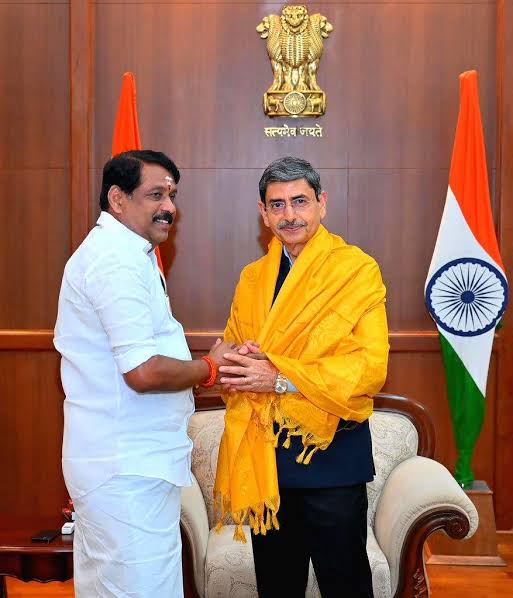
Nainar Nagendran shaking hands with the Governor of Tamil Nadu, who wears a yellow ceremonial shawl, in an office with the national emblem and flag behind them
A formal call on the Governor of Tamil Nadu. Institutional courtesies of this kind are part of the constitutional furniture of state political leadership.

Six responsibilities

What the work consists of

Each entry below is anchored to something documented — an office held, a date, a seat count. The analysis around it is presented as analysis.

01

Organisational reach

State President, from 12 April 2025

Tamil Nadu has 234 assembly constituencies. A state unit that intends to be taken seriously has to hold a functioning district and booth structure in a substantial share of them, and to hold it between elections rather than assembling it in the weeks before one.

The BJP's Tamil Nadu organisation is the responsibility of its state president. That is the plain administrative content of the office, and it is the part that is least visible in press coverage.
02

Alliance management

NDA in Tamil Nadu, 2025–2026

Tamil Nadu politics is conducted through alliances. In April 2025 the BJP announced that it would contest the 2026 assembly election with the AIADMK, and the alliance went to that election with the AIADMK's Edappadi K. Palaniswami as its chief ministerial face. The BJP contested 27 seats within it.

Seat-sharing, campaign sequencing and the public handling of disagreement between partners all sit with the state president. It is negotiation work, and it is conducted largely out of view.

03

Legislative leadership

Leader, BJP group in the Assembly, 2021–2026

Following his election from Tirunelveli in 2021, he led the BJP's group in the Tamil Nadu Legislative Assembly. A small opposition group has no capacity to amend or block; its influence rests on the quality of its interventions and on its use of the procedural instruments available to any member.

Leading such a group is a distinct discipline from leading a party outside the chamber, and he held both roles simultaneously for the final year of the term.

04

Public representation

Press interactions and public meetings

A state president is the party's designated voice. Positions taken at a press interaction become the party's position for the news cycle that follows, and are recorded and quoted accordingly.

The photographic record of 2025 and 2026 is dominated by this part of the work — microphones, district conferences, doorstep interactions and campaign platforms.

05

Institutional relationships

Constitutional and national office

The office carries formal relationships in two directions: with the constitutional authorities of the state, and with the party's national leadership. Both involve regular, largely ceremonial contact, and both are documented in the photographic record on these pages.

06

Accountability for outcomes

May 2026

Leadership is also the acceptance of results. The 2026 assembly election returned one seat for the BJP. Nainar Nagendran, who had contested from Sattur and was not elected, said publicly that the party “gracefully accepted” the outcome, that the people had not given it a mandate to form a government, and that it would take no part in any effort at government formation.

Stating a defeat plainly, without qualification, is a documented act of political conduct, and it belongs in an honest account of leadership as much as any success does.

Inside the organisation

A handover conducted in public

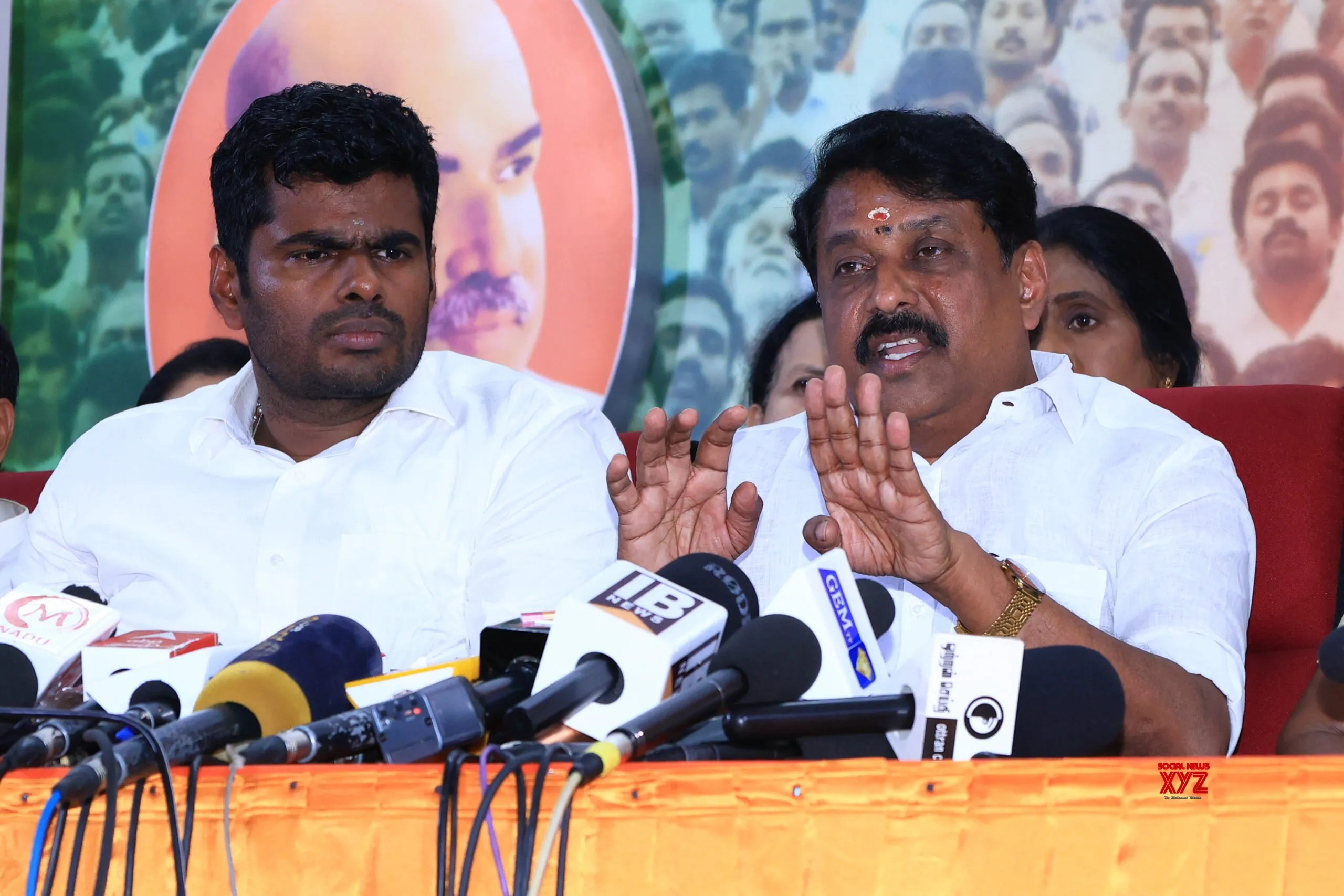
Changes of state leadership are not always graceful. The April 2025 transition between K. Annamalai and Nainar Nagendran was conducted in front of cameras: the nomination was proposed by the outgoing president, the papers were signed together, and the two appeared jointly at the press interaction that followed.

For a party attempting to build in a state where it has never governed, the manner of an internal transition is itself a public signal. It is one of the few aspects of internal party life that is genuinely observable from outside.

Context, not record: the reading above is an interpretation of publicly visible conduct. The documented facts are the date, the proposers, the single nomination and the joint appearances.

Nainar Nagendran speaking at a press conference table crowded with television microphones, with K. Annamalai seated beside him
A joint press interaction, April 2025 — the incoming and outgoing state presidents at the same table.
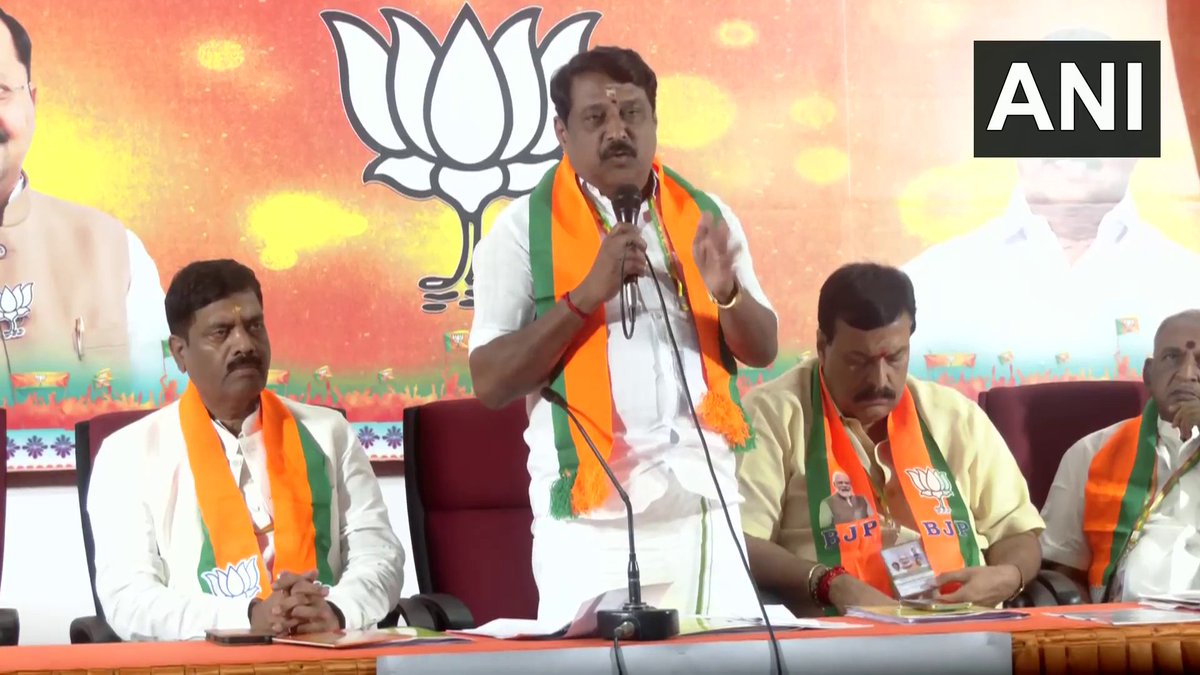
Nainar Nagendran standing and addressing a party meeting from behind a table, with colleagues seated on either side and a lotus backdrop behind
Addressing an internal party meeting. Most of the year's work happens in rooms like this one rather than on a stage.

Leadership philosophy

Stated positions, and the limits of inference

It is common for profile websites to construct a “leadership philosophy” out of speculation. This one does not. What can honestly be said is drawn from positions he has stated on the record and from the shape of the career itself.

  • He has worked within alliance politics rather than against it: the AIADMK partnership announced in April 2025 was the framework he led the party into the 2026 election with.
  • He has sustained a constituency relationship over two decades in Tirunelveli, through two parties and four state governments.
  • He accepted an adverse election result publicly and without contest in May 2026, and ruled out participation in government formation.

Beyond that, inference would be invention. Where the record is silent, this site stays silent.

Continue to public life