- Home
- Public Life
Engagement
Public Life
What a political life looks like away from the chamber and the count: constituency presence, press interaction, party workers, and the courtesies of public office.
The shape of a day
Most of public life is neither legislation nor campaigning.
The recorded life of an Indian state politician is made up, in overwhelming proportion, of appearances: at party offices, at district conferences, at condolence visits, at temple festivals, at the roadside where a television crew has intercepted the convoy.
None of it produces a statute. All of it produces the relationship on which electoral politics in Tamil Nadu actually runs — a relationship of visibility, accessibility and repetition, sustained over years rather than weeks.
Nainar Nagendran's photographic record across 2024 to 2026 is a fair sample of that life. It contains very few images of him alone. Almost every frame includes party workers, journalists, colleagues or members of the public, and the composition is rarely arranged.
- District conferences
- Press interactions
- Party office meetings
- Constituency visits
- Courtesy calls
- Campaign platforms
The press
Answering questions in the open
Tamil Nadu has one of the most crowded regional television markets in India. A state party president answers to it daily, usually standing, usually without notes.
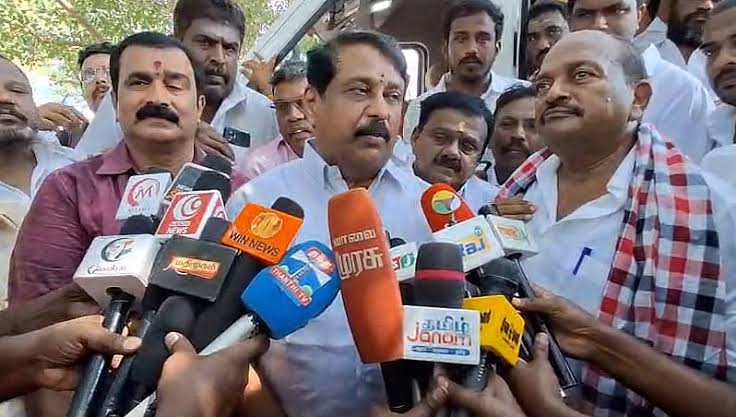
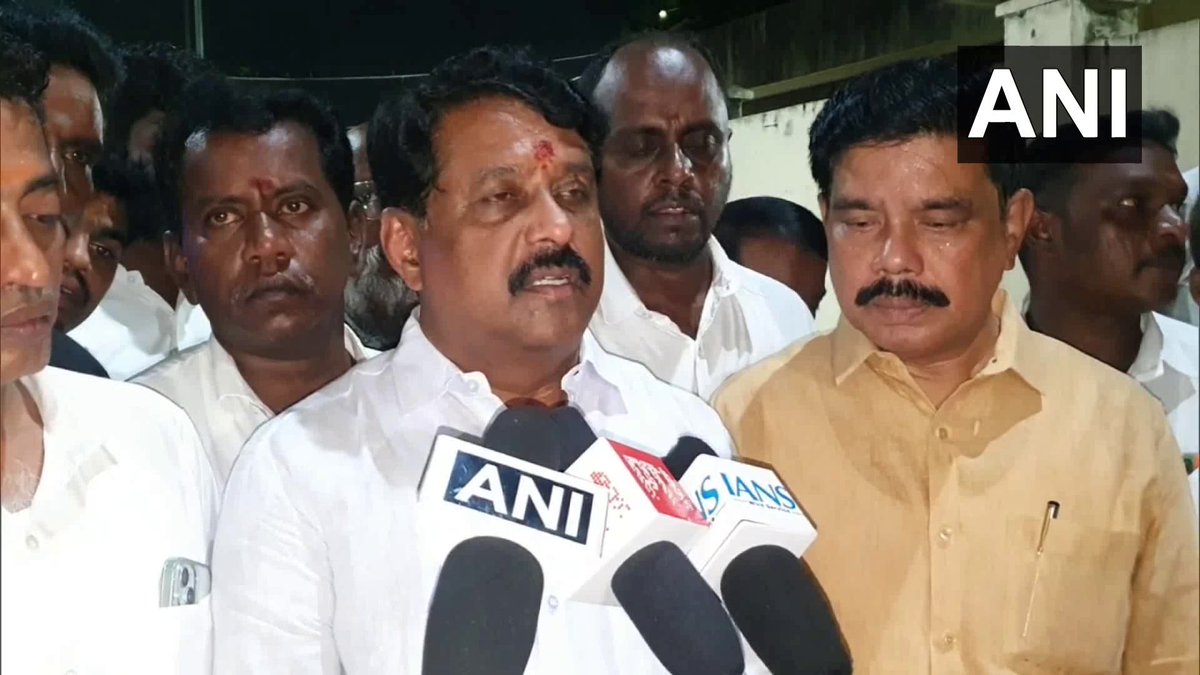
The format matters. A doorstep interaction is not a prepared speech; it is an unfiltered exchange conducted in Tamil, in public, and reproduced within the hour. It rewards clarity and punishes improvisation, and it is the single most common way a state leader's position enters the record.
It also explains why so much of the archive is composed of microphones. These are not staged photographs. They are the by-product of a working method in which access is granted rather than managed, and in which the leader is expected to be available.
Beyond party politics
A courtesy call, and why it was reported
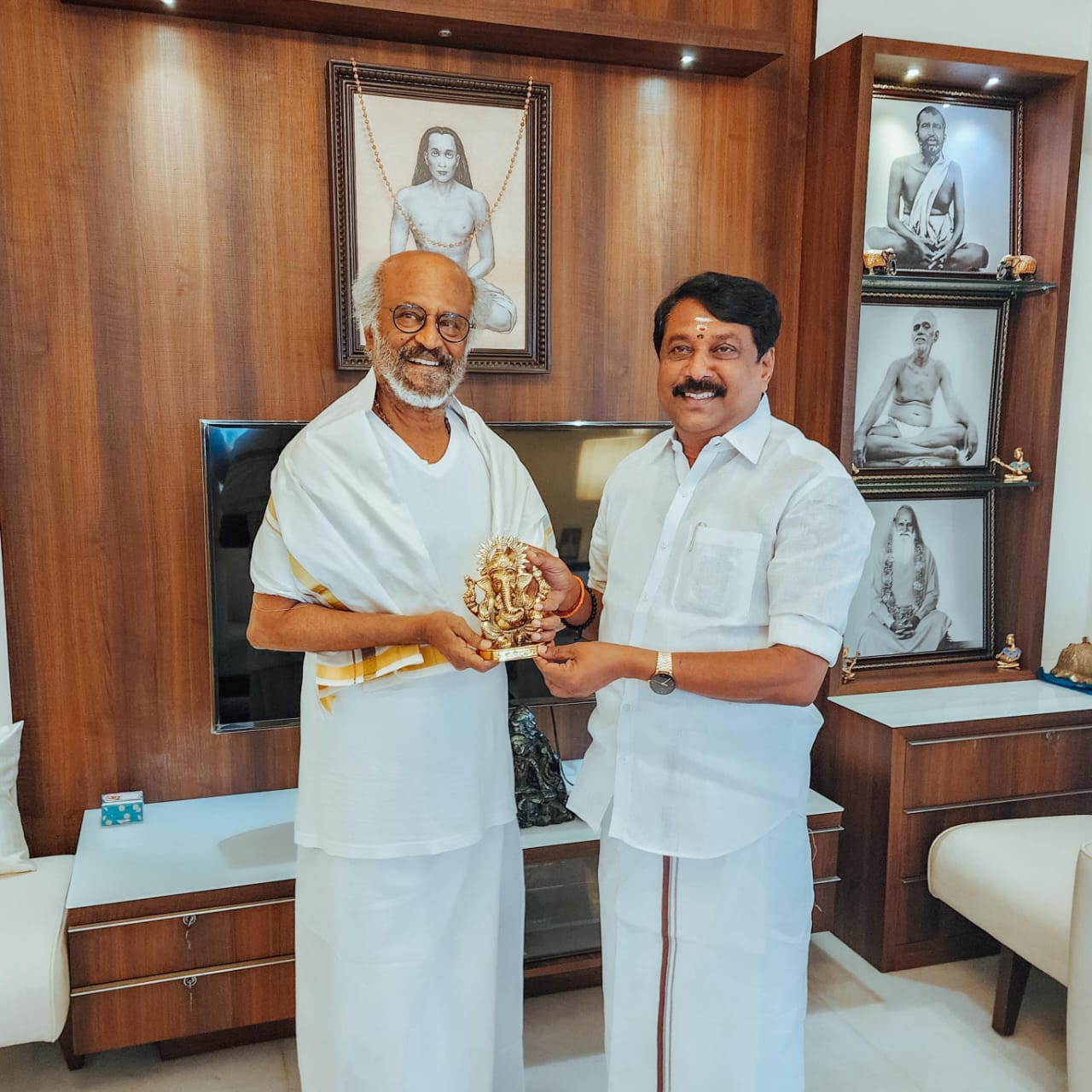
On 18 August 2025, Nainar Nagendran called on the actor Rajinikanth in Chennai to congratulate him on completing fifty years in cinema. Rajinikanth's first film, K. Balachander's Apoorva Raagangal, had been released on 15 August 1975.
The meeting was widely reported. In Tamil Nadu, the boundary between cinema and public life is unusually thin — several of the state's chief ministers came from the film industry — and courtesy calls between political and cinematic figures are read closely by the press.
This was a greeting on a professional anniversary, and nothing more is claimed for it here. It is included because it is documented, dated and photographed, and because it illustrates a part of public life that is neither legislative nor electoral.
The organisation
The people who are not photographed individually
Party organisation in India is a volunteer enterprise. Between elections, district secretaries, booth committees and local office-bearers hold the structure together without salary and largely without public recognition.
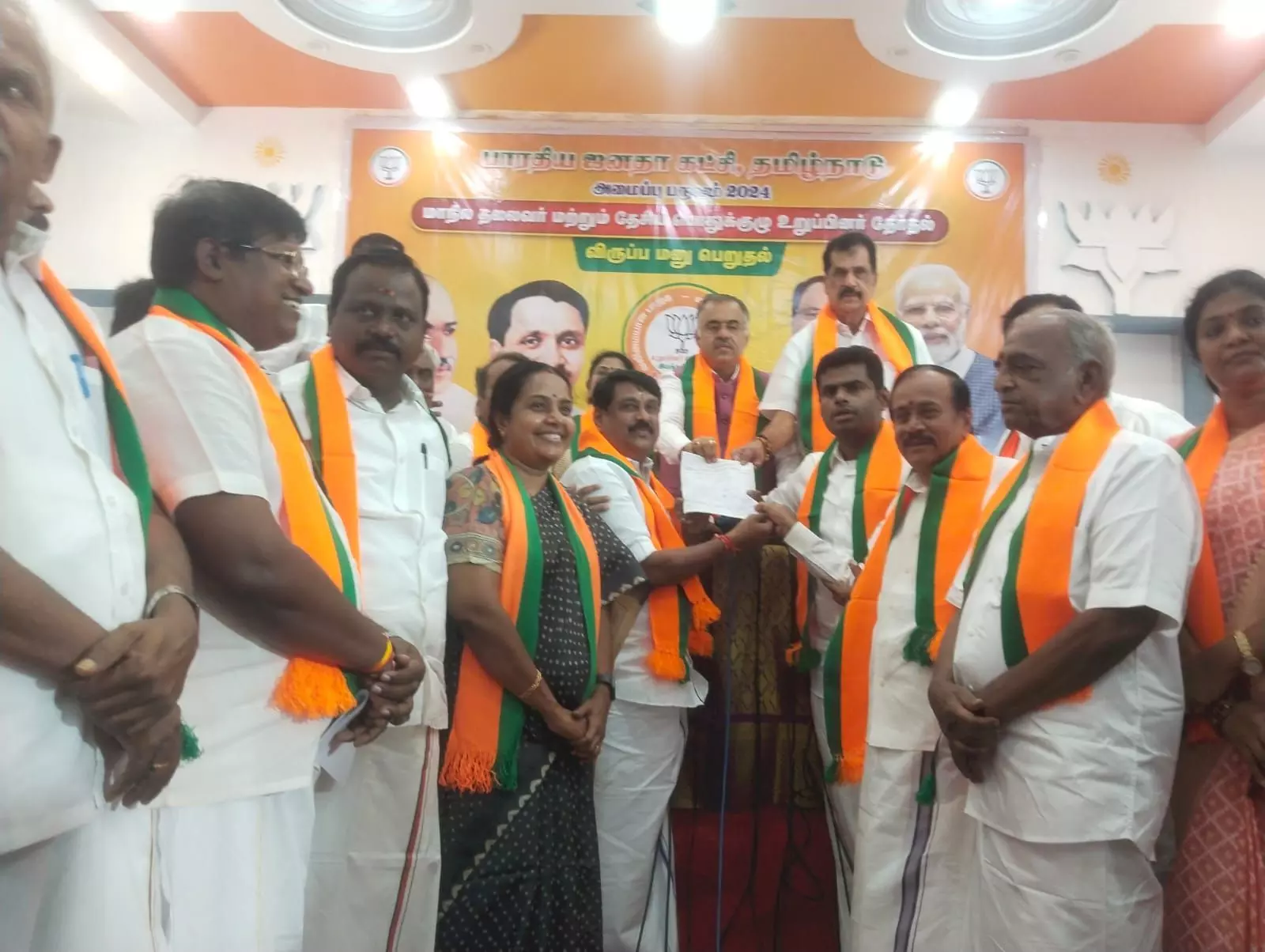
The photograph alongside is from the BJP's Tamil Nadu organisational elections — the internal process by which state and district office-bearers are chosen. It is a routine image of a routine event, and it is worth including precisely for that reason: this is what most of the year looks like.
For a party that has never formed a government in Tamil Nadu, the health of this layer is the practical measure of whether a state unit exists in any meaningful sense between elections.
Constituency
Twenty years in one place
Between 2001 and 2021 he contested Tirunelveli at five consecutive assembly elections and represented it for three terms. In 2024 he contested the parliamentary seat of the same name.
Sustained constituency presence of that length is uncommon, and it is the most clearly measurable feature of his public life: a vote share that held between roughly 42 and 55 per cent across two decades and two party labels.